What this calculator does
It converts the label ratio to a common base unit and scales it to the amount of water you want to prepare.
The result tells you how much concentrate to use without changing the label concentration.
Practical / United States
Learn how to scale product-label instructions like 2 fl oz per gallon into the amount of concentrate you need for a different batch size.
It converts the label ratio to a common base unit and scales it to the amount of water you want to prepare.
The result tells you how much concentrate to use without changing the label concentration.
This is useful for people mixing fertilizer, cleaning concentrate, soap, or car-wash solutions.
It is especially helpful when product labels use US units but you prefer metric amounts.
Concentrate per water = label concentrate amount ÷ label water amount
Needed concentrate = desired water amount × concentrate per water
Then convert the result into your preferred output unit.
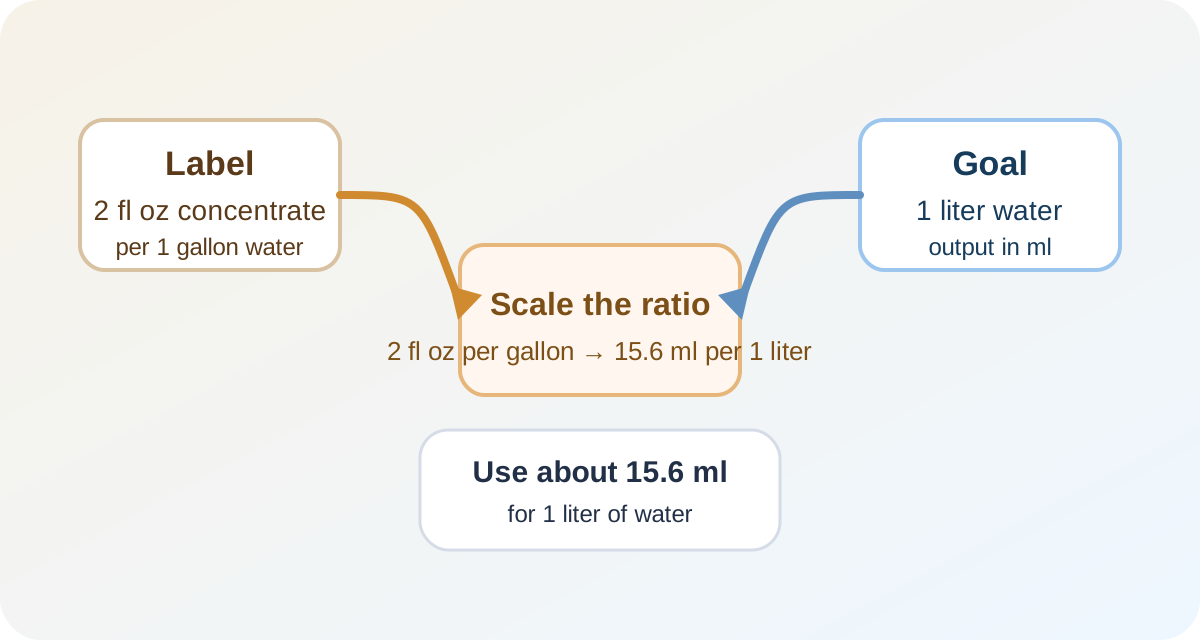
Label says 2 fl oz of concentrate per 1 gallon of water.
You want to mix 1 liter of water.
The calculator shows about 15.6 ml of concentrate.